Showing posts with label Florida. Show all posts

Tuesday, October 25, 2016

Request for Proposal - Hurricane Response UAS Design

Mission
The mission for the request for proposal that relates to hurricane damage and insurance claim collection via UAS. After large hurricanes, infrastructure often is limited, damaged to roads and pathways is limited due to fallen trees and power and communications networks are often limited if not completely destroyed.  In order to facilitate quick insurance claims, the ability to gather photographs immediately after the hurricane is vital. Not only with his data help insurance adjusters, but it could also augment a governmental response to the damage by helping predict and plan required resources and support. In order to create a system capable of accomplishing this mission, many parts of the system can come from Commercial Off the Shelf (COTS) products. The majority of the design effort will go into ruggedizing both the air vehicle as well as ground control station in addition to finding ways to power both the air vehicle and ground station without a reliable power source. The entire process from design and testing should take no longer than one year.
Derived Requirements
1.                  Transportability
1.1      Transportation case weight
1.1.1        Transportation case shall be authorized for checked baggage on airline.
1.1.2        Transportation case shall fit in sedan trunk
1.1.3        Transportation case shall be man portable (50LBS or less)
1.2   Transportation case as charger
1.2.1        Transportation case shall serve as charging station for air vehicle.
1.2.2        Transportation case shall serve as charging station for GCS.
1.3      Transportation case ruggedness
1.3.1        Transportation case shall be waterproof per IP68 rating.
1.3.2        Transportation case shall be drop proof from 5 feet.
1.3.3        Transportation case shall be dustproof per IP68 rating.
2.                  Data-link
2.1  Data-link frequency
      2.1.1 Data-link shall not interfere with emergency rescue communications.
      2.1.2 Data-link shall communicate without external network assistance (no LTE).
2.1.3 Data-link shall be resistant to interface from external influence.
2.1.4 Data-link shall be encrypted.
2.2   Data-link distance
      2.2.1 Data-link shall extend to at least 2 miles.
      2.2.2 Data-link shall be line of sight only.
3. Ground Support Equipment
3.1   Power Generation
      3.1.1 Power generation shall be from external generator (gasoline).
      3.1.2 Power generation shall be from 12VDC (car charger).
      3.1.3 Power generation shall be from solar panels.
      3.1.4 Power generation shall be adjustable between gen/vehicle/solar via simple switch.          
3.2   Image processing
      3.2.1 Image processing shall be done off site.
      3.2.2 Image processing shall be transmitted via cellular network
      3.2.3 Image processing shall be transmitted via satellite network
      3.2.4 Image processing shall be transmitted via WIFI
      3.2.5 Image processing shall automatically transmit via lowest cost network available. 
3.3  On-site maintenance
      3.3.1 On-site maintenance package shall support operations for one-week mission
      3.3.2 On-site maintenance package shall fit inside transportation case
      3.3.3 On-site maintenance package shall provide common spares for one-week mission
      3.3.4 On-site maintenance package shall include common tools for one-week mission

Testing Requirements:    
1.                  Transportability
1.2      Transportation case weight
1.2.1        Check complete transportation case with airline common carrier
1.2.2        Place complete transportation case in trunk of typical sedan 
1.2.3        Weight complete transportation case to determine if under 50 pounds.
1.2   Transportation case as charger
1.3.4        Conduct charging operations via transportation case for air vehicle 
1.3.5        Conduct charging operations via transportation case for GCS 
1.4      Transportation case ruggedness
1.4.1        Submerge transportation case in 1 meter of water for 30 minutes then inspect.
1.4.2        Drop transportation case from 5 feet then inspect for damage.
1.4.3        Expose transportation case to dust for 30 minutes then inspect.
2.                  Data-link
2.1  Data-link frequency
      2.1.1 Operate data-link within close proximity of fire department and police department.
      2.1.2 Operate data-link in a location that does not have LTE network.
2.1.3 Operate data-link in a location that is exposed to exposed high voltage powerlines.  
2.1.4 Attempt to intercept and exploit encrypted data-link
2.2   Data-link distance
      2.2.1 Operate data-link past 2 miles and check for signal loss.  
      2.2.2 Operate data-link beyond line of sight and check for signal loss.  

3.         Ground Support Equipment
3.1   Power Generation
      3.1.1 Power system via gasoline generator and attempt a full charge cycle.
      3.1.2 Power system via 12VDV car port and attempt a full charge cycle.
      3.1.3 Power system via solar panels and attempt a full charge cycle.
      3.1.4 Swap power source during charging cycle and check for proper switching.            
3.2   Image processing
      3.2.1 Send data to offsite location for processing.  
      3.2.2 Send data to offsite location for processing via cellular network.  
      3.2.3 Send data to offsite location for processing via satellite network
      3.2.4 Send data to offsite location for processing via WIFI
      3.2.5 While sending data check for proper network swap according to net availability    
3.3  On-site maintenance
      3.3.1 Operate the system for a week with no external maintenance support.
      3.3.2 Pack the maintenance package into transportation case and ensure compliance.  
      3.3.3 Operate the system for a week with no external maintenance part support
      3.3.4 Operate the system for a week with no external maintenance tool support
             
Development Process and Timeline
             The method of development for this system will required multiple teams to work with both uniquely new designs as well as modify COTS components. Due to the fact that most components will not need to be designed from scratch the process should be slightly quicker. The entire timeline of all 5 phases will be approximately 12 months from concept design to production. One of the key processes during all phases of development is the requirement for an overarching systems engineer to ensure system integration is occurring continuously. Ensuring the components are subject to phased testing and validation would assist in ensuring development was both on time and in compliance with requirements through the entire design process (Sadraey, 2010). In regards to the phases of development the will be broken down as follows:

Phase 1: Concept Design- Build conceptual solution to above requirements. (2 month)  
Phase 2: Preliminary Design- Determine what COTS components can be used and integrate and design new and unique components as per the requirements above. (2 months)
Phase 3: Detail Design-Teams design production ready systems that integrate both COTS and non-COTS components and integrate into total system design plan. (3 months)    
Phase 4: Test and Evaluation- Utilize the testing requirements above in order to ensure sub-system integration between teams is conducted to standard.  Selection of test sites and procedures will be accomplished.  (2 month)
Phase 5: Production- Selection of production site, marketing, and distribution will be considered. (3 months)

Testing Strategies: Due to the heavy reliance of both ground support equipment and power generation components, the testing strategies of this system will focus on the integration of all the major components of this system. In order to test the system properly, the key will be finding a location that is representative of a post hurricane disaster area. In order to provide a controlled environment as well as the attributes that are similar to a hurricane effected area, remote sites must be used. The capstone test and evaluation exercise should occur in a location with limited vehicle mobility, limited power resources, limited network connectivity, and for a duration of at least 7 days. The location will not be resupplied of any system parts, tools, or maintenance parts. This exercise will simulate the conditions that this system may meet when deployed to a disaster site, and the duration would simulate the typical time on the ground this system would remain without support from the rear.
Design Rational
            The major themes used to build the design requirements were durability and self-sufficiency. In regards to durability, the aircraft will need to be shipped, flown, driven, or carried in many different vehicles to reach areas effected by hurricanes. In order to protect the system, while at the same time allowing a single person to transport it, a high level of detail was put on the transportation case. In order to reduce weight and complexity, allowing the transportation case to act not only as a protective case, but also a charging stations and physical location of the GCS helped reduce cost and weight while decreasing additional equipment requirements. The transportation box’s resistance to the elements was vital due to the possibility of the system being stored outside if conditions do not allow for climate controlled indoor storage.
The aspect of self-sustainability is vital due to the fact that after a hurricane, the USPS, UPS, FedEx and other shipping options will often be limited due to destruction of infrastructure such as roads, runways, and ports (Cleary, 2016). The need to have all maintenance parts and tools stored in the transportation case will allow the sole operator of the system to deploy forward into the destruction zone without the need to trek back and forth, which would be both logistically difficult and time consuming. The ability of a single operator to gather multiple claims in a period of week while deployed forward will provide insurance companies with a marked advantage over there competition.
The power and network requirements presented also allow for near real time information flow from the destruction zone to a processing center regardless of power and network availability, which would most likely be either degraded or destroyed following a hurricane. The use of satellite networks, solar power or generators helps not only deploy to areas with limited infrastructure, but also allow for continuous operations without the need to return to the rear.
The entire system was designed to support long term self-contained operations in areas with degraded or destroyed infrastructure. The concept of sending out a small package with a single operator will reduce operational costs as well as logistical costs while maximizing the number of claims an insurance company to collect. The system will also decrease the reaction time that traditional insurance companies need to provide proper insurance claim coverage in hurricane affected areas. 
References
Cleary, T. (2016, October 06). What Is a Category 4 Hurricane? 5 Fast Facts You Need to Know. Retrieved October 25, 2016, from http://heavy.com/news/2016/10/what-is-category-4-hurricane-matthew-damage-strength-history-definition-wind-speed-storm-surge-facts-names/

Sadraey, M. (2010). A Systems Engineering Approach to Unmanned Aerial Vehicle ... Retrieved October 25, 2016, from http://enu.kz/repository/2010/AIAA-2010-9302.pdf 

Tuesday, October 18, 2016

UAS Missions and their Respective Attributes, Challenges, and Legalities

            There are many missions that unmanned aerospace systems (UASs) accomplish in both the public and civil realms. One of the most well suited missions to UAS is aerial Intelligence, Surveillance, and Reconnaissance (ISR). This mission set it not only a military mission, it is also conducted by police, border patrol, and FBI. All agencies that conduct aerial ISR via UAS share many of the same tactics techniques and procedures to accomplish the task. The type, size, and design of the UASs used in this mission vary widely based on where the mission is being conducted, the budget that a particular agency has for the mission, as well as other mission related constraints that are unique to each agency.     
            Three examples of platforms that accomplish the role of aerial ISR are the MQ-1C Gray Eagle which is used by the US Army, the MQ-8 Fire Scout which is used by the US Navy, and the Qube which was used by the Grand Forks, ND Police department to make its first night time arrest aided by a UAS (Koebler, 2014). The MQ-1C is a standard large fuel powered fixed wing UAS designed for launch and recovery via a 5,000ft runway. The Gray Eagle is capable of flying beyond line of sight as well as loitering for over 25 hours. This long loiter time and extended range provide the US Army with a powerful and capable system for aerial ISR (GA-ASI, 2016). 
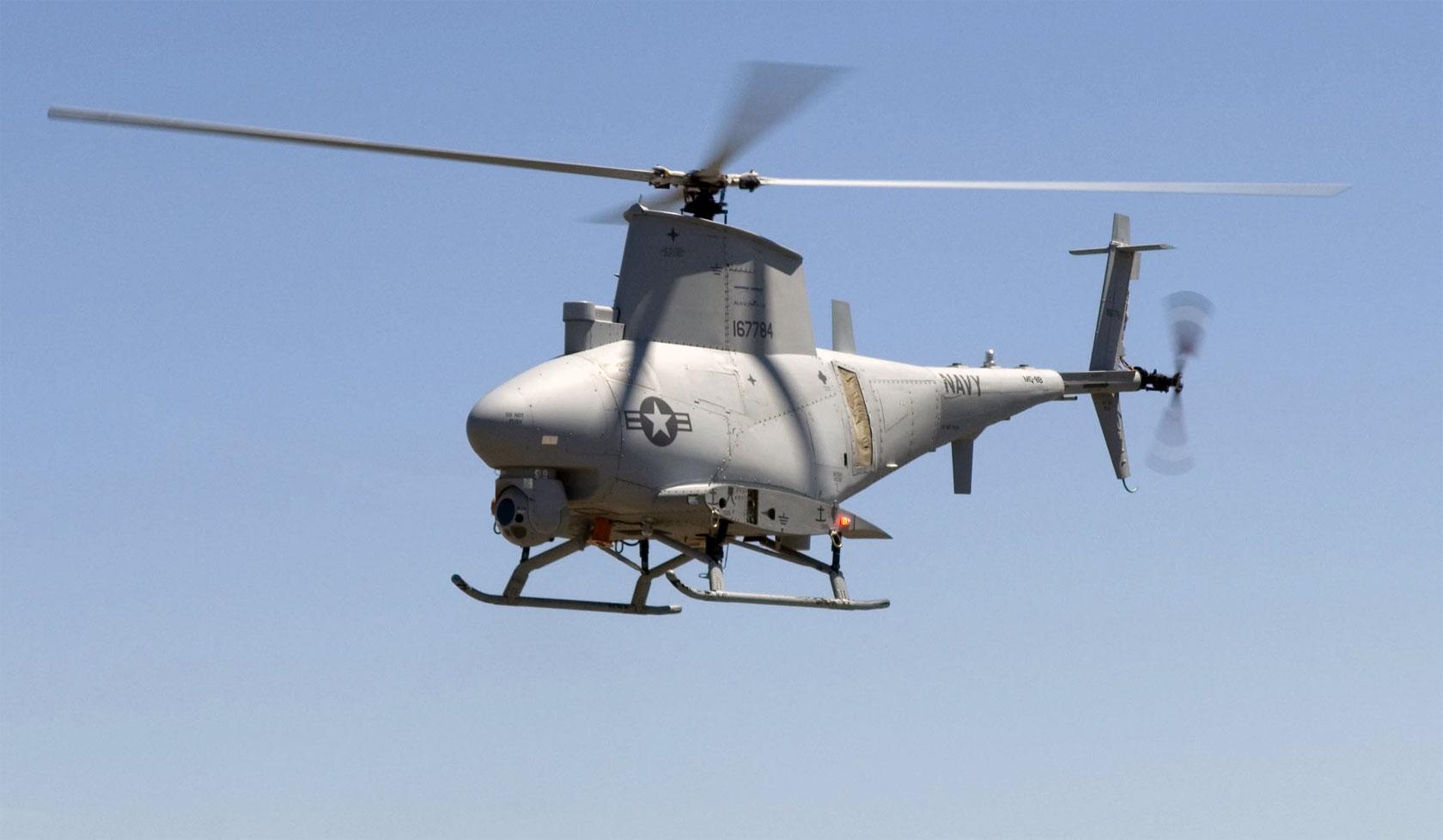
The MQ-8 Fire Scout is used by the US Navy to conduct aerial ISR, but it is a rotary wing platform which aids in launch and recovery from ships and boats. The system is capable of flight up to 16,000ft as well as can loiter for over 12 hours. While not as capable as the Gray Eagle, the Fire Scout has the huge advantage of vertical takeoff and landing, which is vital when operating at sea (Northrup Grumman Inc., 2016). 
The Qube by AeroVironoment is a small battery powered quadcopter UAS that is utilized by the Grand Forks, ND police department to aid in criminal surveillance, which is the police version of ISR. The Qube is capable of only 40 minutes of flight and has a line of sight range of only 1km, but meets both the mission requirements and budgetary constraints of a small police department (AeroVironment Inc., 2016).
            The mission requirements vary depending on where and when the mission takes place, but there are some major considerations that must be taken in to account when selecting a UAS platform. Most aerial ISR systems need to be able to gain a vantage point that humans cannot typical achieve on foot. This means that they need to be well above the target. For high value targets in Afghanistan it could mean 20,000ft loiter altitude. For a ship or marine target, 10,000ft above the ocean may be the right solution. For a police chase in an urban area, a 400ft altitude could be adequate. The other main mission task that must be executed is relaying the video photography of the target back to the operator in near real time. Regardless of size, platform type, or cost, this function is accomplished at all levels for aerial ISR UASs.
            The major challenges for conducting aerial ISR can be two fold, there are platform based challenges as well as payload based challenges. In terms of platform challenges, achieving beyond line of sight flight is expensive and technologically advanced. The use of third party satellites is expensive as well as complex. Another aspect of flying beyond line of sight domestically is that is regulatory restrictive (Anderson, 2016). One Major benefit of utilizing UASs for aerial ISR is that they can remain in the air longer than most other manned platforms. Compared to systems like the MQ-12 Liberty manned airplane that is flown by the US Air Force, most UASs regardless of size can outlast it while conducting an ISR mission. The MQ-12 can only stay aloft for 6 hours without having to break station to refuel (Airforcetechnology.com, 2016). The MQ-1C can last a full 25 hours on one tank of fuel (GA-ASI, 2016).
            There are multiple legal and moral issues that often are challenging for UAS to be utilized in aerial ISR mission, and even more so when UASs are equipped with munitions such as the hellfire missile. In the case of a military UAS conducting ISR and firing hellfires there is a moral issue as to who is to blame in case of collateral damage cause by improper target identification, or lack of target area situational awareness (McGuire, 2015). There are major legal issues when conducting ISR domestically by the police. The main issue is privacy. Privacy is a huge concern for the American public, and when conducting police action, the use of a UAS could require a warrant depending the state. California is a very conservative state when it comes to UAS use by the police. Recently the state assembly approved a law requiring police to get a warrant to use a UAS to conduct a search (Bailey, 2014). Other states are working through litigation to determine the legality of UAS surveillance by police, but there are many challenges both perceived and actual to utilizing UASs for aerial ISR both domestically and deployed.       
References
AeroVironment Inc. (2016). Visit AeroVironment Inc. Retrieved October 18, 2016, from https://www.avinc.com/uas/view/qube
Anderson, R. (2016, September 24). The opportunities and challenges of flying drones beyond line of sight (BLOS) | Commercial Drones Blog | Aviassist. Retrieved October 18, 2016, from http://www.aviassist.com.au/commercial-drones-blog/opportunities-challenges-flying-drones-beyond-line-sight-blos/
Bailey, R. (2014, August 05). California Assembly Passes Bill Requiring Police to Get a Warrant for Surveillance Drones. Retrieved October 18, 2016, from http://reason.com/blog/2014/08/05/california-assembly-passes-legislation-r
GA-ASI. (2016). Gray Eagle UAS. Retrieved October 18, 2016, from http://www.ga-asi.com/gray-eagle
Koebler, J. (2014, October 2). Police Used a Drone to Chase Down and Arrest Four DUI Suspects in a Cornfield. Retrieved October 18, 2016, from http://motherboard.vice.com/read/police-used-a-drone-to-chase-down-and-arrest-four-dui-suspects-in-a-cornfield
Maguire, L. (2015, September 26). The Ethics of Drone Warfare. Retrieved October 18, 2016, from http://www.philosophytalk.org/community/blog/laura-maguire/2015/09/ethics-drone-warfare
Northrup Grumman Inc. (2016). Fire Scout. Retrieved October 18, 2016, from http://www.northropgrumman.com/Capabilities/FireScout/Pages/default.aspx?utm_source=PrintAd


Friday, May 15, 2015

Implementation of an Unmanned System for Law Enforcement Surveillance

The use of unmanned aerial system by law enforcement has been a hot button topic over the past few years. The legality of 4th amendment searches, as well as the ethical questions raised when using UASs have plagued law enforcement agencies for years. In the below proposal, I will present a strategy that my help bring the T-Hawk UAS into the front line for Florida law enforcement.

The UAS I have selected to use in my implementation strategy is the T-Hawk by Honeywell. The key to this platform is its ease of use, safety, and ability to fly in multiple weather and environmental conditions. This particular platform has been used for years by law enforcement because of its capable electro-optic/ infrared capability (EO/IR).  In order to create a successful implementation strategy, I will look at the following aspects; privacy, ethics, safety, and lost link capability.


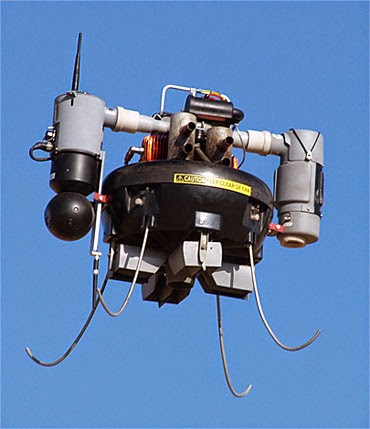
Privacy: The T-Hawk is a gas powered vertical take off ducted fan style UAS. It is capable of flying up to 10,000 feet and at 46 miles per hour for up to 50 minutes at a time. The system has a hover and stare capability that makes it ideal for monitoring and search operations. Due to the system being gas powered, it is rather loud and noticeable (often called a flying lawnmower). The fact that this system is loud when it flies is actually a positive in terms of the debate over privacy. Due to the fact that most people within visual range of the system can hear it, means that it provides a similar aspect of privacy as a manned helicopter. For most people, the idea of the system being able to see you only when you can hear it provides a level of acceptable privacy, because they are aware of its presence. For some smaller systems that are battery powered and unable to be heard, people feel like they are being unfairly violated and unable to avoid surveillance.

Ethics: Along with privacy the idea of the ethical nature of UASs is still a hot button topic. Florida was the first state to pass the law that limits UAS use by law enforcement.  The “Freedom from Unwarranted Surveillance Act” went into effect in Florida on July 1, 2013. The root of this act ensures all UAS surveillance by law enforcement requires a warrant. The only exception is if someone’s life is at risk or an imminent threat of a terror attack exists. Currently, as long as law enforcement agencies follow this piece of legislation, there should be a minimal ethical issue. In the future, as UAS rules change, I feel that these rules should and will be changed, but as long as the law enforcement agencies operate under the current federal and state laws, then they will be successful.
   
Safety: The T-Hawk is a relatively small UAS. The key to safely employing this system would be based on a three part plan. The first two steps would include rigorous operator training and aircraft preventative maintenance. These two aspects are key to all aviation safety, and if done correctly will ensure the system is flown in the correct airspace, under the right performance constraints, and free of mechanical defects. The third part would be to only operate the system at what the FAA determines to be a safe location and altitude. In the field of UAS, operators should not strive for zero risk, but should strive to reduce unnecessary risk in all aspects of operations.

Lost Link: Due to the automated nature of the T-Hawk, lost link is less of an issue than other smaller manually controlled UASs. The system can be set with a lost link time limit that automatically issue a return home command. The system can be set to climb to a set return home altitude and then make its way back and land vertically at the initial launch point. One positive to this system is its capability of vertical flight. This will prevent the system from having to make complicated traffic patterns in order to land and will provide a very predictable lost link flight path. Additionally, to add another level of safety to lost link operations, a clearly published standard operating procedure and training will be essential to ensure the system does what is expected every time.

In conclusion, UAS hardware and software is not the key aspect to a successful implementation plan. The key is sufficient operator and maintainer training, publishing of standard procedures, and compliance with local and national laws. If a law enforcement entity spends the appropriate time and effort accomplishing those three things, the ethical and moral issues should be easy to justify and the safety and lost link concerns should be of minimal concern.

References: