There are many missions that unmanned aerospace systems (UASs)
accomplish in both the public and civil realms. One of the most well suited
missions to UAS is aerial Intelligence, Surveillance, and Reconnaissance (ISR).
This mission set it not only a military mission, it is also conducted by
police, border patrol, and FBI. All agencies that conduct aerial ISR via UAS
share many of the same tactics techniques and procedures to accomplish the
task. The type, size, and design of the UASs used in this mission vary widely
based on where the mission is being conducted, the budget that a particular
agency has for the mission, as well as other mission related constraints that
are unique to each agency.
Three examples of platforms that accomplish the role of aerial ISR
are the MQ-1C Gray Eagle which is used by the US Army, the MQ-8 Fire Scout
which is used by the US Navy, and the Qube which was used by the Grand Forks,
ND Police department to make its first night time arrest aided by a UAS
(Koebler, 2014). The MQ-1C is a standard large fuel powered fixed wing UAS
designed for launch and recovery via a 5,000ft runway. The Gray Eagle is
capable of flying beyond line of sight as well as loitering for over 25 hours.
This long loiter time and extended range provide the US Army with a powerful
and capable system for aerial ISR (GA-ASI, 2016).
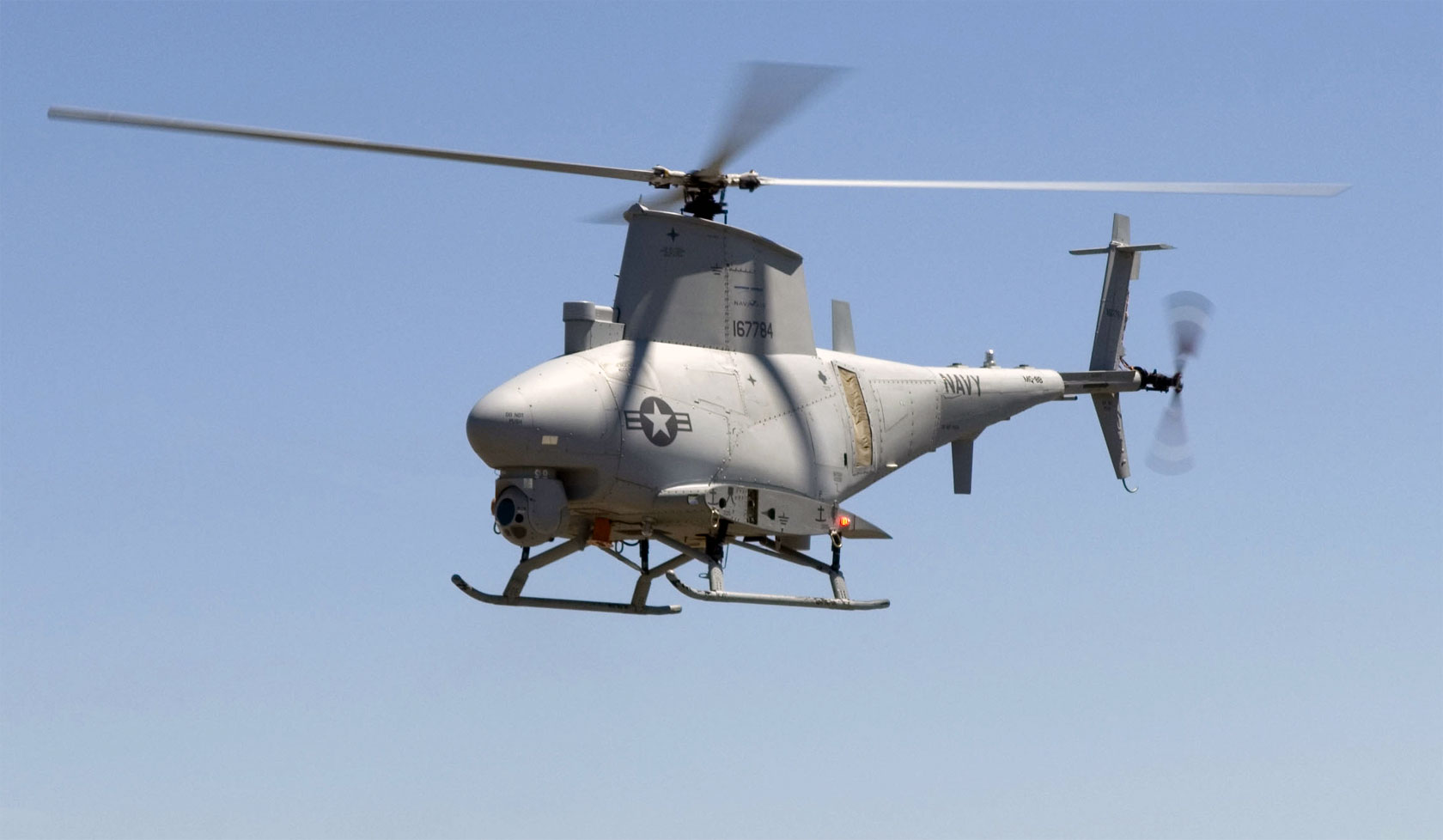
The MQ-8 Fire Scout is used
by the US Navy to conduct aerial ISR, but it is a rotary wing platform which
aids in launch and recovery from ships and boats. The system is capable of flight
up to 16,000ft as well as can loiter for over 12 hours. While not as capable as
the Gray Eagle, the Fire Scout has the huge advantage of vertical takeoff and
landing, which is vital when operating at sea (Northrup Grumman Inc., 2016).
The
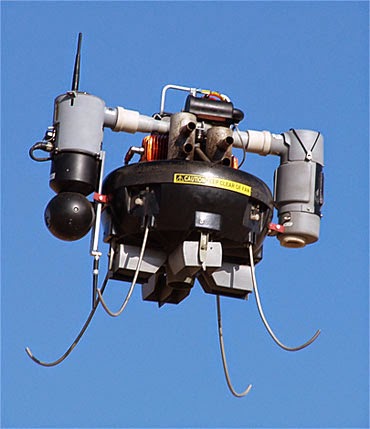
Qube by AeroVironoment is a small battery powered quadcopter UAS that is
utilized by the Grand Forks, ND police department to aid in criminal surveillance,
which is the police version of ISR. The Qube is capable of only 40 minutes of
flight and has a line of sight range of only 1km, but meets both the mission
requirements and budgetary constraints of a small police department
(AeroVironment Inc., 2016).

The mission
requirements vary depending on where and when the mission takes place, but
there are some major considerations that must be taken in to account when
selecting a UAS platform. Most aerial ISR systems need to be able to gain a
vantage point that humans cannot typical achieve on foot. This means that they
need to be well above the target. For high value targets in Afghanistan it
could mean 20,000ft loiter altitude. For a ship or marine target, 10,000ft
above the ocean may be the right solution. For a police chase in an urban area,
a 400ft altitude could be adequate. The other main mission task that must be
executed is relaying the video photography of the target back to the operator
in near real time. Regardless of size, platform type, or cost, this function is
accomplished at all levels for aerial ISR UASs.
The major
challenges for conducting aerial ISR can be two fold, there are platform based
challenges as well as payload based challenges. In terms of platform
challenges, achieving beyond line of sight flight is expensive and
technologically advanced. The use of third party satellites is expensive as
well as complex. Another aspect of flying beyond line of sight domestically is
that is regulatory restrictive (Anderson, 2016). One Major benefit of utilizing
UASs for aerial ISR is that they can remain in the air longer than most other
manned platforms. Compared to systems like the MQ-12 Liberty manned airplane that
is flown by the US Air Force, most UASs regardless of size can outlast it while
conducting an ISR mission. The MQ-12 can only stay aloft for 6 hours without
having to break station to refuel (Airforcetechnology.com, 2016). The MQ-1C can
last a full 25 hours on one tank of fuel (GA-ASI, 2016).
There are
multiple legal and moral issues that often are challenging for UAS to be
utilized in aerial ISR mission, and even more so when UASs are equipped with
munitions such as the hellfire missile. In the case of a military UAS
conducting ISR and firing hellfires there is a moral issue as to who is to
blame in case of collateral damage cause by improper target identification, or
lack of target area situational awareness (McGuire, 2015). There are major
legal issues when conducting ISR domestically by the police. The main issue is
privacy. Privacy is a huge concern for the American public, and when conducting
police action, the use of a UAS could require a warrant depending the state. California
is a very conservative state when it comes to UAS use by the police. Recently the
state assembly approved a law requiring police to get a warrant to use a UAS to
conduct a search (Bailey, 2014). Other states are working through litigation to
determine the legality of UAS surveillance by police, but there are many
challenges both perceived and actual to utilizing UASs for aerial ISR both domestically
and deployed.
References
AeroVironment Inc. (2016). Visit AeroVironment Inc. Retrieved October 18,
2016, from https://www.avinc.com/uas/view/qube
Anderson, R. (2016, September 24). The opportunities and challenges of
flying drones beyond line of sight (BLOS) | Commercial Drones Blog | Aviassist.
Retrieved October 18, 2016, from http://www.aviassist.com.au/commercial-drones-blog/opportunities-challenges-flying-drones-beyond-line-sight-blos/
Bailey, R. (2014, August 05). California Assembly Passes Bill Requiring
Police to Get a Warrant for Surveillance Drones. Retrieved October 18, 2016,
from http://reason.com/blog/2014/08/05/california-assembly-passes-legislation-r
GA-ASI. (2016). Gray Eagle UAS. Retrieved October 18, 2016, from
http://www.ga-asi.com/gray-eagle
Koebler, J. (2014, October 2). Police Used a Drone to Chase Down and
Arrest Four DUI Suspects in a Cornfield. Retrieved October 18, 2016, from
http://motherboard.vice.com/read/police-used-a-drone-to-chase-down-and-arrest-four-dui-suspects-in-a-cornfield
Maguire, L. (2015, September 26). The Ethics of Drone Warfare. Retrieved
October 18, 2016, from http://www.philosophytalk.org/community/blog/laura-maguire/2015/09/ethics-drone-warfare
Northrup Grumman Inc. (2016). Fire Scout. Retrieved October 18, 2016,
from
http://www.northropgrumman.com/Capabilities/FireScout/Pages/default.aspx?utm_source=PrintAd